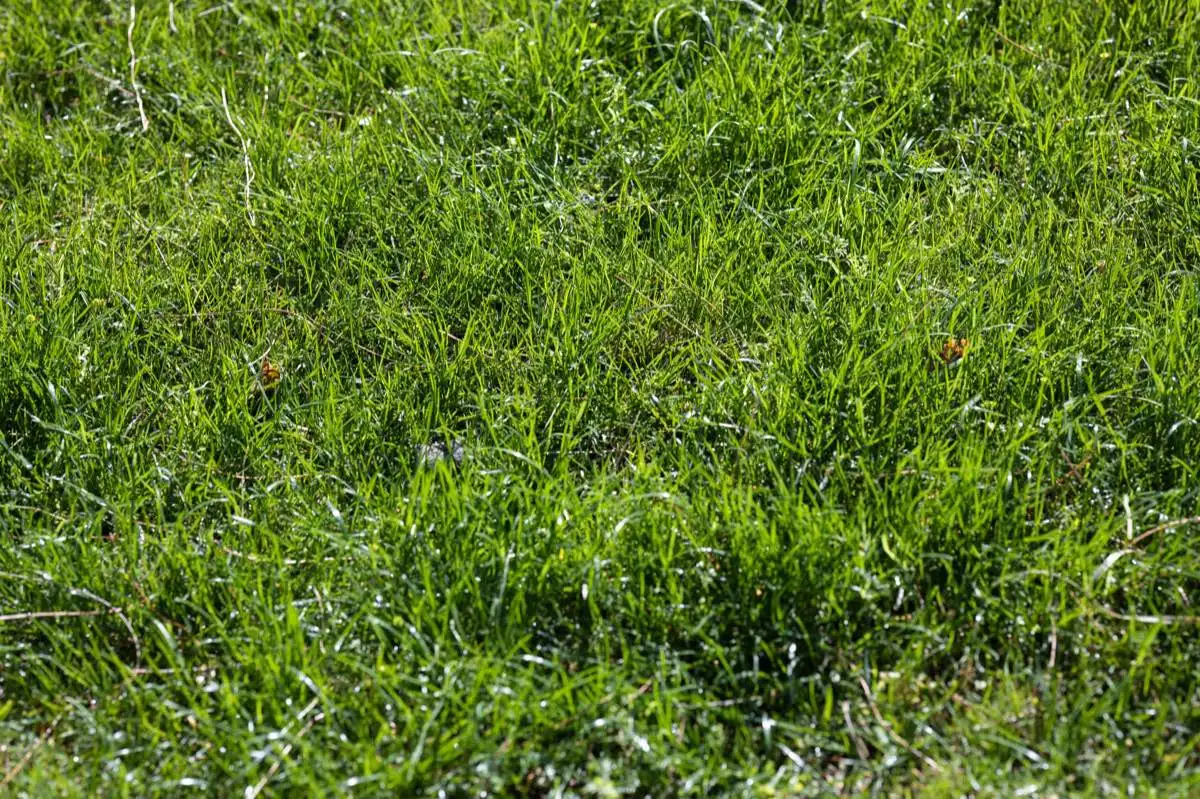
New sod starts putting down roots in about two weeks, and it's fully established in roughly four to six weeks. In Elk Grove's warm-season heat it moves on the fast end of that, sometimes gripping in a week if the watering is right. The catch, and there's always a catch, is that "if the watering is right" is doing all the heavy lifting in that sentence.
Here's the honest version. Sod is just grass that's been peeled off one field and set on top of your dirt. For the first couple weeks it has no roots holding it to your yard, so it's living entirely off the water you give it. Get that part right and it roots on schedule. Get it wrong and you've bought the world's most expensive brown carpet.
The rooting timeline, stage by stage
Rooting happens in two phases, and knowing which one you're in tells you how careful to be.
- Days 1 to 14 — shallow roots. Thin white roots reach down into the topsoil and start anchoring the sod. This is the fragile stage. The sod is basically on life support from your hose, so miss a watering in the heat and you'll see the edges curl and gray.
- Days 30 to 45 — deep roots. Now roots push down several inches and the lawn becomes self-sufficient. Once you're here, the grass can pull moisture from deeper in the soil and forgives the occasional missed watering.
- Weeks 4 to 6 — established. Mow it, walk on it, let the kids and the dog have it back. It's a real lawn now, not a science project.
Season matters more than anything. Warm-season grasses like St. Augustine, Bermuda, and Zoysia (the ones that actually belong in the the Sacramento Valley) root fastest when the soil is warm, which around here is most of the year. Lay sod in the heat of summer and it roots quick but drinks like a marathon runner. Lay it in a cool spell and it's slower but far more forgiving.
The watering schedule that actually makes it root
This is the whole game, so we're giving it a table instead of a paragraph you'll skim and forget. Most sod that dies didn't die from bad grass or bad soil. It died of thirst in week one.
| When | How often | Goal |
|---|---|---|
| Day 1 (install day) | Water within 30 min, soak deep | Get 1+ inch down, no dry spots |
| Week 1 | 2 to 4 times a day, short cycles | Keep top 1–2 inches always moist |
| Weeks 2–3 | Once a day, longer soak | Push roots deeper, dry surface between |
| Week 4+ | 2 to 3 times a week, deep | Train roots to reach for water |
| Established | Normal lawn watering | Deep and infrequent |
Water in the early morning so the sun doesn't cook it off before it soaks in, and so the grass isn't sitting wet overnight (that's how you invite fungus). In a Elk Grove July, that week-one schedule might mean four rounds a day. Nobody said new sod was low-maintenance.
The one opinion we'll die on: the sod isn't the hard part, the watering is. If you're not going to water on this schedule for two weeks straight, don't spend extra on premium turf. Buy the cheaper grass and put the difference toward a sprinkler timer. A watered $0.40-a-square-foot lawn beats a neglected $0.80 one every single time.
How to tell if your sod has rooted: the tug test
You don't need a soil probe or a lab. You need one hand.
Around day 10 to 14, grab a corner of a sod piece and pull up gently. If it peels back like a rug, the roots haven't taken hold yet, so keep watering and stay off it. If it resists and feels stuck to the ground, congratulations, it's rooting. Do this in a few spots around the yard, because the sunny side by the driveway roots faster than the shady corner.
Once it passes the tug test consistently, you can ease off the water and take the first mow (keep it high, and make sure the blade's sharp so you cut the grass instead of yanking it out).
What slows rooting down in the the Sacramento Valley
Same sod, two yards, wildly different results. Usually it comes down to what's under the grass and what's falling from the sky.
- Valley heat. Great for speed, brutal for moisture. Sod dries out fast here, which is why the week-one watering is non-negotiable in summer.
- Clay soil. Much of the Elk Grove area sits on heavy clay that either sheds water off the top or holds it like a bathtub. Roots struggle to push into compacted clay, which is why real soil prep and topdressing before install is the difference between a lawn that roots and one that sulks.
- Poor soil contact. Sod laid over lumpy, un-rolled dirt leaves air gaps, and roots can't grow through air. A lawn roller after install presses the sod into the soil so the roots have somewhere to go.
- Stale sod. Grass that sat folded on a pallet in the sun for two days is already stressed before it hits your yard. Fresh-cut and laid same day roots noticeably better.
The brown-lawn story we see every August
Here's the call we get every summer. Someone had a beautiful new lawn installed, went out of town for a long weekend, and came home to crispy brown edges and seams pulling apart. Nine times out of ten nobody skipped a step on the install. They just didn't water it while they were gone, and in a Valley heatwave two dry days in week one is all it takes.
The frustrating part is that browned-out new sod is often salvageable if you catch it in the first few days and flood it back. Wait a week and you're looking at a tear-out and replacement instead. If your fresh sod is going gray at the edges, don't wait to see if it bounces back on its own. It usually doesn't.
The bottom line
Sod roots in about two weeks and settles in fully by week four to six, faster in Elk Grove's heat if you keep it watered and slower if you don't. There's no trick, no additive, no premium grass that skips the schedule. Prep the soil, roll it for contact, water it like it's your job for the first two weeks, and run the tug test before you trust it.
If you'd rather not babysit a hose in July, that's what we're for. Elk Grove Elite Sod & Turf handles the part that actually decides whether sod takes, from full soil prep and grading to fresh-cut sod installed the same day, and we send you home with the exact watering schedule for your grass and your yard. Free estimate, straight answers: call (844) 511-2320.
Ready for a free quote in Elk Grove?
Elk Grove Elite Sod & Turf — free estimate, clear scope, no pressure. Use the form on this page or jump to the homepage quote.
Related services in Elk Grove
Elk Grove Elite Sod & Turf money pages — go straight to the service you need.
- Bermuda Sod →
Bermuda sod is the water-budget answer for a full-sun Elk Grove yard, using substantially less irrigation than tall fescue once established and repairing its own wear as it spreads. We install TifTuf and Tifway 419, and the honest catch is winter colour: Bermuda goes dormant and straw brown from roughly November to April here, and you need to be at peace with that before you buy it.
- Land Grading & Leveling →
Land grading and leveling is the part of a lawn nobody sees and everything else depends on. We laser-grade Elk Grove yards to a fall of roughly a quarter inch per foot away from the slab, fill the low spots, rip through the hardpan where test holes find it, and cut a route for winter water to leave, because a yard that ponds in February will not grow a lawn in June no matter what you plant.
- Topsoil & Soil Amendment →
Topsoil and soil amendment is what you are really buying when you buy a lawn, because the top six inches decide almost everything that happens afterwards. Elk Grove sits largely on San Joaquin series soil, California's official state soil, and its defining feature is a cemented hardpan somewhere between roughly eight inches and three feet down that roots will not cross and water will not drain through.
- Tall Fescue Sod →
Tall fescue sod is the Sacramento Valley default and the grass most Elk Grove homeowners actually want, because it holds colour twelve months a year instead of going straw brown from November to April. We install turf-type tall fescue and dwarf fescue blends across Elk Grove, and we will tell you upfront what that year-round green costs you at the meter.
- Zoysia Sod →
Zoysia sod is what Elk Grove homeowners buy after a few summers of feeding, mowing and watering a fescue lawn and deciding there has to be a better arrangement. It grows slowly, so you mow less, and it grows densely, so it crowds out most weeds without a chemical program propping it up.
Frequently asked questions
How long before you can walk on new sod in Elk Grove?
Stay off it for about two weeks. Walking on sod before the roots grab pulls the seams apart and creates air pockets that dry the roots out. After roughly 14 days, do the tug test — if it holds, light foot traffic is fine. Save the backyard football for week four.
How do I know if my sod has rooted?
Grab a corner and pull up gently. If it lifts like a rug, the roots haven't taken yet. If it resists and you feel the sod holding to the soil, it's rooting. Most Elk Grove lawns pass this test around day 10 to 14 in warm weather.
Can you water new sod too much?
Yes. Constantly soggy soil suffocates roots and invites fungus, and the roots stay lazy and shallow because water is always right there at the surface. You want the top inch or two consistently moist, not a swamp. If you can squeeze mud out of it, ease off.
Why is my sod not taking root?
Usually one of three things: not enough water in the first two weeks, poor soil contact (skipped rolling or laid over lumpy dirt), or heat stress on sod that sat on a pallet too long before install. Fix the water first, since that's the cause about eight times out of ten. If it's browning fast, call (844) 511-2320 before it's gone.
How can I make sod root faster?
Prep the soil before it arrives, roll the sod for tight contact, and water on schedule. That's the whole recipe. In Elk Grove's heat, warm-season grass can push shallow roots in as little as a week if the watering is dialed in. There's no spray or additive that beats consistent moisture.
Local context
How this applies in Elk Grove, CA
Every article here is written from sod installation work done in Elk Grove and the Sacramento Valley, so the numbers reflect local labour, permit and material costs rather than a national average. Your own job can land either side of them depending on access, the condition of what is already there, and the materials you pick — turf-type tall fescue sod, dwarf fescue blends, TifTuf Bermuda.
The way to turn any of this into a real answer is to have someone look at your actual situation. The free estimate is free, itemized and written down, with no deposit and no obligation. Call (844) 511-2320 or start on the Elk Grove Elite Sod & Turf homepage.
Areas Elk Grove Elite Sod & Turf covers
Elk Grove first, then the surrounding communities of the Sacramento Valley. Each has its own page with local detail rather than a copy of this one:
- Sacramento, CA — Sacramento County, population 524,943
- Rancho Cordova, CA — Sacramento County, population 79,332
- Folsom, CA — Sacramento County, population 80,454
- Citrus Heights, CA — Sacramento County, population 87,583
- Galt, CA — Sacramento County, population 25,383
- Lodi, CA — San Joaquin County, population 66,348
Or jump to the full list of Elk Grove services.
The Elk Grove Elite Sod & Turf Team
Licensed sod installation pros in Elk Grove, CA
Written by the Elk Grove Elite Sod & Turf team — licensed, insured sod installation pros with 20+ years serving Elk Grove, CA and the surrounding area.